
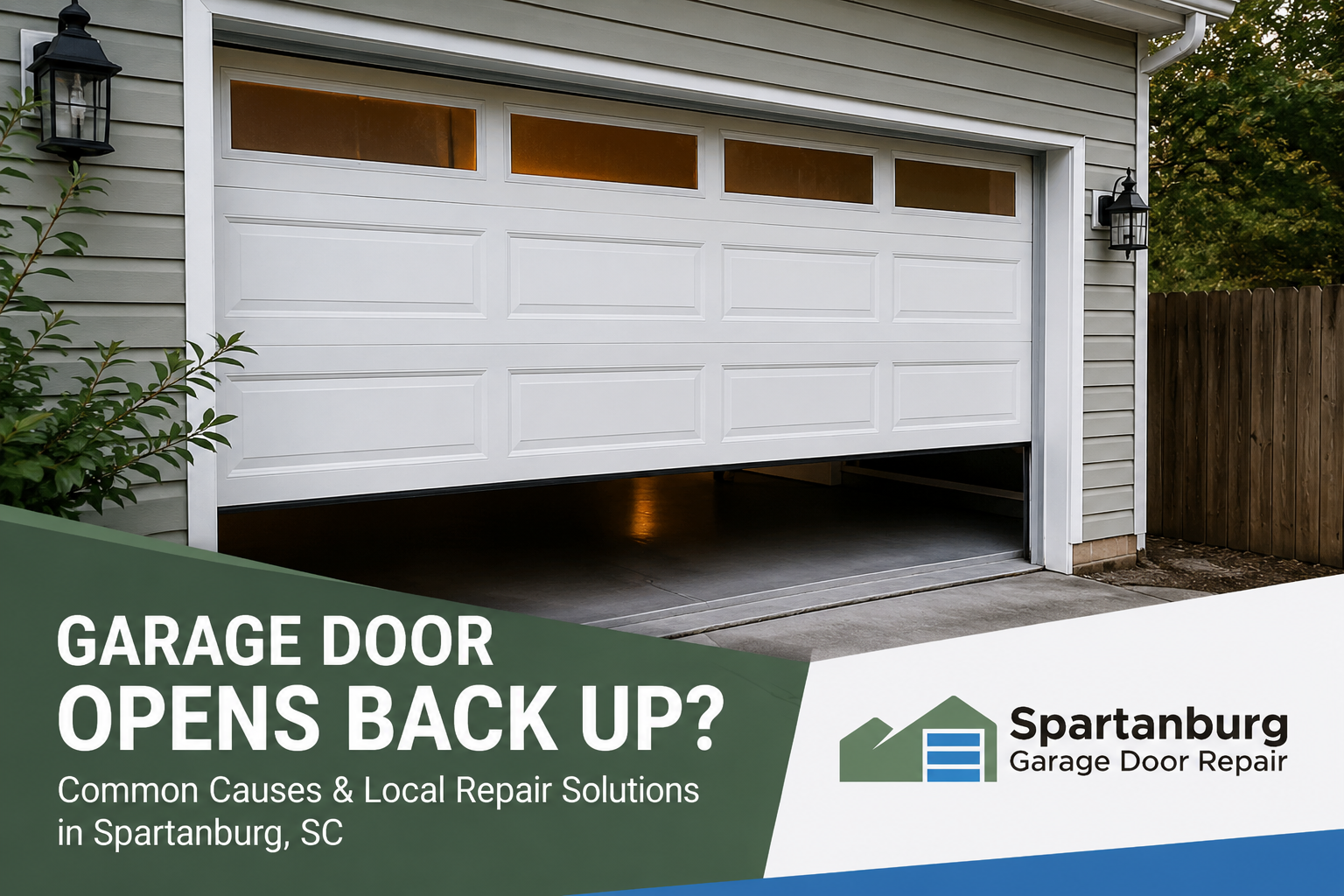
Why Does My Garage Door Close Then Open Back Up?
Quick answer: Your garage door closes then opens back up because the opener is sensing a problem. Common causes include blocked or misaligned safety sensors, something in the track, incorrect opener settings, worn rollers, weak springs, damaged cables, or too much resistance in the door system. If it keeps happening, your garage may stay unsecured and the opener may be working harder than it should.
Most Common Reasons Your Garage Door Reverses
A garage door usually reverses because the opener thinks something is blocking the door or the door is not moving correctly.
The most common causes include blocked safety sensors, debris in the tracks, incorrect opener travel limits, worn rollers, dry hinges, weak springs, damaged cables, poor door balance, or weather stripping that is dragging.
Some issues are simple. Others can be unsafe to handle without the right tools. Start with the easy checks, then stop using the door if it looks crooked, feels heavy, or keeps reversing.
Start With the Safety Sensors
Safety sensors are the small devices near the bottom of your garage door tracks. They face each other across the door opening.
When they work correctly, they stop the door from closing on a person, pet, vehicle, bike, or object. If the sensors are blocked, dirty, or out of line, the opener may think something is in the doorway. The door starts to close, stops, and opens again.
In Spartanburg and the Upstate, garages often collect pollen, dust, leaves, grass clippings, and spider webs. Sunlight can also hit the sensors at certain times of day and confuse the opener.
Wipe the sensor lenses with a soft cloth. Then check that both sensors are pointing at each other. If one light is blinking or off, the sensors may be misaligned or damaged.
When the Door Hits the Floor and Opens Again
If the door closes all the way, touches the floor, and then opens back up, the opener’s travel setting may be off.
The travel setting tells the opener where the door should stop. If the setting is wrong, the opener may think the door hit something when it reached the floor. As a safety response, it sends the door back up.
This can happen after a power issue, opener repair, opener replacement, or normal wear over time.
Avoid increasing the opener force setting just to make the door close. If the door is reversing because of resistance, raising the force can make the system less safe and may damage the opener or door.
A technician can adjust the opener settings and test the door so it closes fully and safely.
When the Door Reverses With Nothing in the Way
If nothing is blocking the sensors or doorway, the door may be reversing because it is too hard to move.
Your opener should not have to fight the door. A properly working garage door should move smoothly and stay balanced. If the door is heavy, uneven, stuck, or dragging, the opener may reverse because it senses too much pressure.
This can happen when rollers wear out, tracks bend, hinges dry out, hardware loosens, cables weaken, or springs start to fail. Weather stripping can also drag or stick, especially during humid weather.
You may notice the door shaking, jerking, squeaking, grinding, scraping, or moving slower than normal. The door may also hang lower on one side if a cable or roller problem is affecting movement.
Stop using the door if it looks uneven, feels heavy, or makes loud grinding sounds. These signs can point to a mechanical issue that should be inspected before the opener is damaged.
Can a Weak Spring Make a Garage Door Open Back Up?
Yes. A weak or broken spring can make the garage door too heavy for the opener to move correctly.
Garage door springs carry most of the door’s weight. When a spring weakens or breaks, the opener has to work much harder. The door may reverse, move unevenly, stop halfway, or only open a few inches.
A broken spring may also make a loud bang in the garage. You may see a visible gap in the spring, or the door may feel extremely heavy if you try to lift it manually.
Do not try to replace garage door springs yourself. Springs are under high tension and can cause serious injury.
If you think the spring is damaged, schedule broken spring replacement in Spartanburg, SC before using the door again.
Can Spartanburg Weather Affect Garage Door Sensors and Parts?
Yes. Heat, humidity, rain, pollen, and seasonal debris can affect garage door parts over time.
For many Spartanburg homeowners, this problem shows up after heavy spring pollen, humid summer weather, or a season of leaves and debris building up around the garage opening.
Pollen and dust can build up on safety sensors. Humidity can make weather stripping drag or stick. Leaves and outdoor debris can collect near the tracks. Over time, rollers, hinges, and metal parts can also dry out or wear down.
If your garage door only reverses during certain weather conditions or at a certain time of day, the issue may be related to sensor glare, friction, weather stripping, or worn parts.
What Spartanburg Homeowners Can Safely Check
You can safely check a few simple things before calling for garage door service.
Make sure nothing is blocking the doorway. Clean the sensor lenses. Check that both sensor lights are on. Look for obvious debris in the tracks. Make sure the wall button or remote button is not stuck.
If those steps fix the issue, it may have been a simple sensor or obstruction problem.
If the door keeps reversing, stop troubleshooting and schedule service. Do not adjust springs, cables, bottom brackets, or opener force settings on your own. Those parts can be dangerous if handled incorrectly.
When Should You Stop Using the Door?
Stop using the garage door if it keeps closing and opening back up after you check the sensors and doorway.
You should also stop using it if the door looks crooked, feels heavy, moves unevenly, shakes, makes loud grinding sounds, or has loose cables. These signs can mean the door system is under stress.
Repeatedly pressing the button can strain the opener and make the damage worse. It is better to find the cause early than wait for the door to stop working completely.
Garage Door Repair in Spartanburg, SC
If your garage door closes then opens back up, Spartanburg Garage Door Repair can inspect the sensors, opener settings, tracks, springs, cables, rollers, and door balance to find the real cause.
We serve homeowners in Spartanburg, SC and nearby Upstate communities with clear explanations and safe repair recommendations. We are a local Spartanburg garage door company, not a pass-through crew.
From older garages near downtown Spartanburg to newer homes around the growing Upstate suburbs, this issue often comes down to sensors, door balance, or worn moving parts.
Call (864) 202-6695 to schedule garage door service in Spartanburg, SC.